Lens choices · Level 2

Reach Without Crowding

L2

Start with the distance, then choose the focal length

Most photographers choose a lens and then hope the animal comes close enough. Reverse that habit. Decide the working distance you will accept — the one at which the animal carries on undisturbed and the park rules are respected — and then ask which focal length makes a picture at that distance.

The arithmetic is simple enough to do in the vehicle. The size of the subject on your sensor equals focal length × subject size ÷ distance. Keep every value in millimetres and the answer is in millimetres too.

  • Elephant 3 m tall at 80 m, 400 mm → 15 mm on a 24 mm-tall sensor (about 62%)
  • Kingfisher 17 cm at 15 m, 600 mm → 6.8 mm (about 28%)
  • Leopard 0.8 m at shoulder, 40 m, 500 mm → 10 mm (about 42%)

The elephant fills the frame comfortably with a mid-range zoom. The kingfisher remains small even at 600 mm, which is why bird photographers carry more reach — and why patience at a favoured perch beats creeping forward.
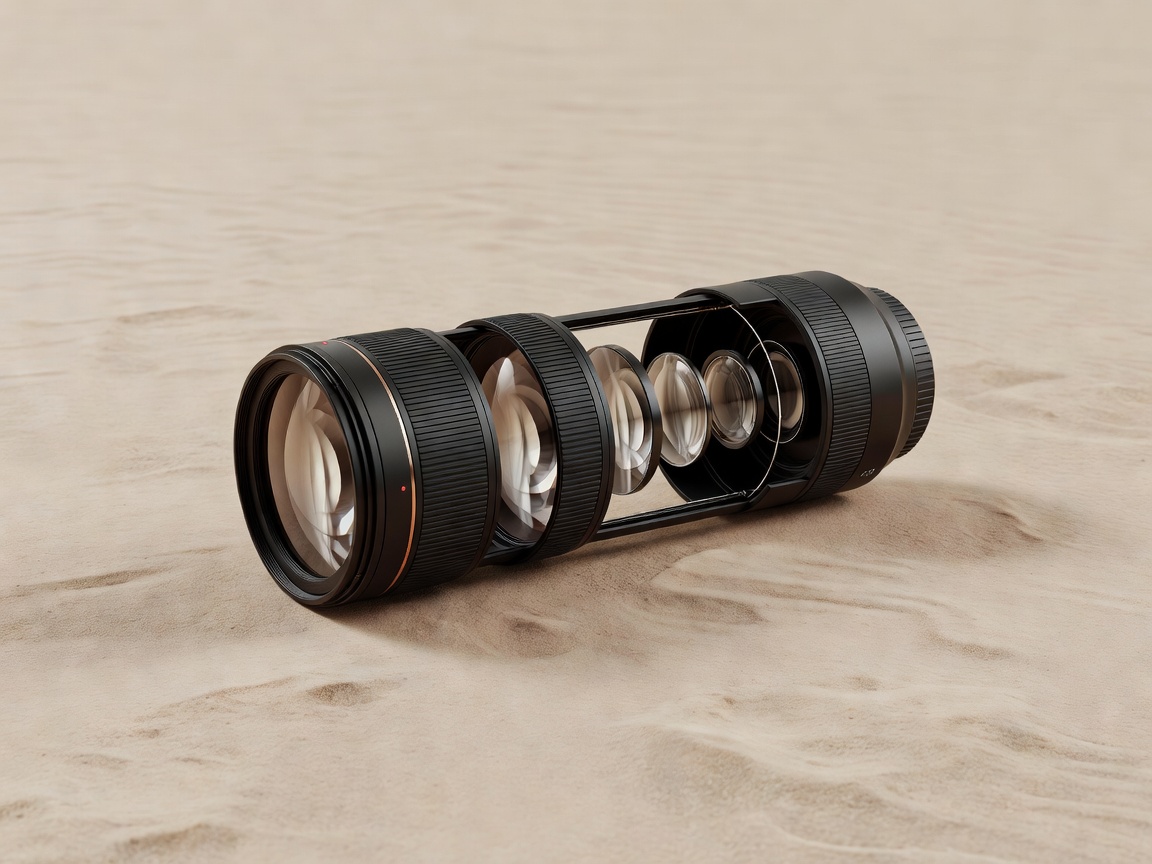
Soft-lit 3D cutaway render of a telephoto zoom lens showing glass groups and the zoom ring on a plain sand background
Simulated render: telephoto zoom cutaway showing the zoom and focus ring positions. Illustration only.

Zoom or prime?

On a shared game drive a zoom wins most days. Animals move between distances you cannot change, and a 100–400 mm or 180–600 mm lets you go from a full herd of buffalo to a single oxpecker on a horn without swapping lenses in dust. Primes such as a 600 mm f/4 give one or two extra stops of light and cleaner backgrounds, which matters at dawn in South Luangwa or along the Chobe River at dusk, but their weight and fixed framing suit hides, boats and private vehicles better.

A practical pair for many travellers is a long zoom on one body and a 24–105 mm or 70–200 mm on a second. The shorter lens is not for getting closer; it is for the moments when animals approach the vehicle on their own and the long lens is suddenly too tight.

Crop sensors and teleconverters

An APS-C sensor shows a narrower field of view: a 400 mm lens frames like 600 mm on full frame with a 1.5× crop. You gain apparent reach and lose some low-light headroom. A 1.4× teleconverter costs one stop of light; a 2× costs two, and autofocus slows. Use converters in bright morning light with static or slow subjects, and remove them when the light fades.

Cropping in software is the honest fallback. A sharp, well-exposed file cropped by 30% is better than a soft file shot through a 2× converter at ISO 12800.

Support setups in a vehicle

Support comparison for game-drive vehicles and hides
SupportSetup timeWorks withWatch out for
Beanbag on door or roof frameSecondsAny lens up to 600 mmEngine vibration; fill locally
Window clamp + gimbal head2–3 minutesHeavy primes, closed vehiclesMust suit the vehicle frame
MonopodSecondsBoats, hides, walking with a guideBlocks neighbours in shared seats
Hand-heldNoneLenses under about 2 kgFatigue on long sightings
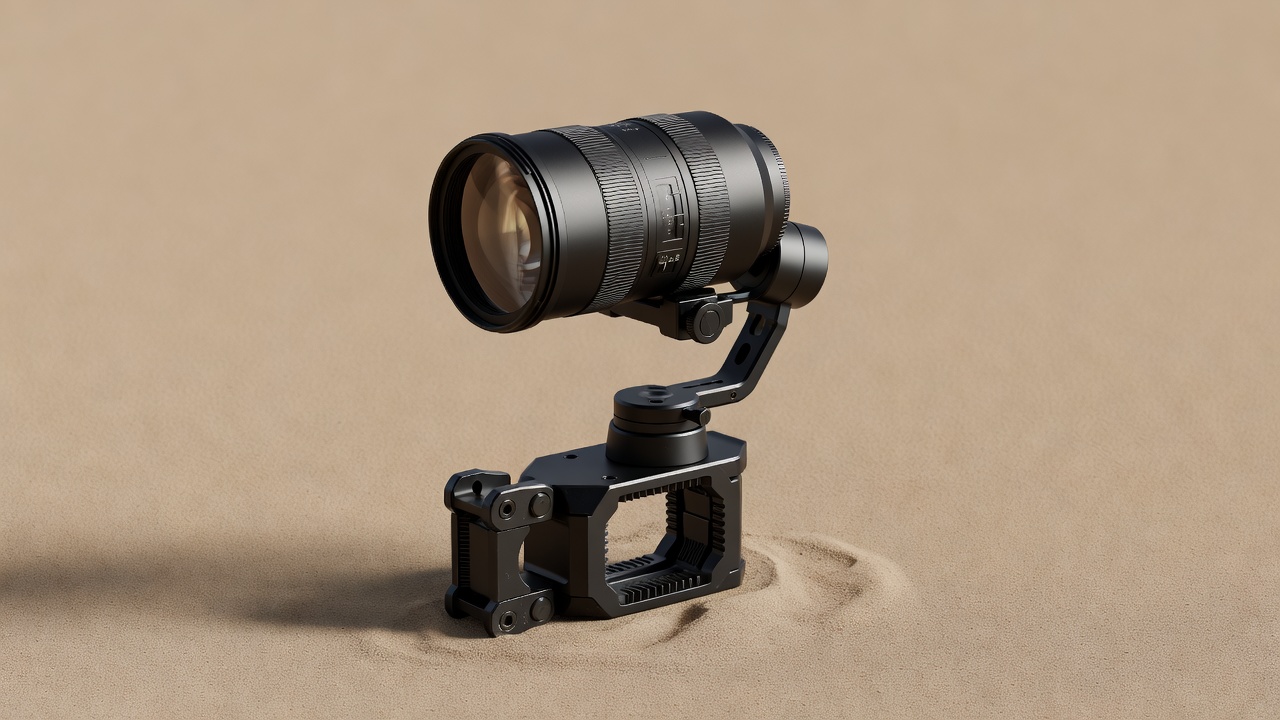
3D render of a window clamp with gimbal head holding a large prime lens, isolated on a plain sand background
Simulated render: window clamp and gimbal head. Control positions are labelled for teaching.

Shutter speed and stabilisation

The old guideline of 1/focal length (1/600 s at 600 mm) is a starting point for a still subject on a steady support. Modern stabilisation lets you go slower for a sleeping lion, but subject movement does not care about stabilisation. For walking animals start at 1/1000 s; for birds in flight 1/2500 s or faster.

Ask your guide to turn off the engine where permitted. Many guides do so routinely, but they balance it against safety and the other guests.

When reach runs out

There will be sightings where no lens you own makes the animal large. A serval hunting 150 m away in the long grass of the Serengeti is a small shape however you frame it. That is the moment to change the picture, not the distance. Widen out, include the grass and the light, and let the scale itself be the subject. Many of the most memorable images from Amboseli show elephants small beneath Kilimanjaro precisely because the photographer chose not to fill the frame.

Ethical stop point. Never ask a guide to leave the road where off-road driving is prohibited — it is banned in Kruger National Park and tightly regulated in the Masai Mara. If the frame is too small, the answer is a different picture.
  • Note the distance before choosing focal length.
  • Pick the support before the animal moves.
  • Set a minimum shutter speed for the subject's likely movement.
  • Plan a wider fallback frame.